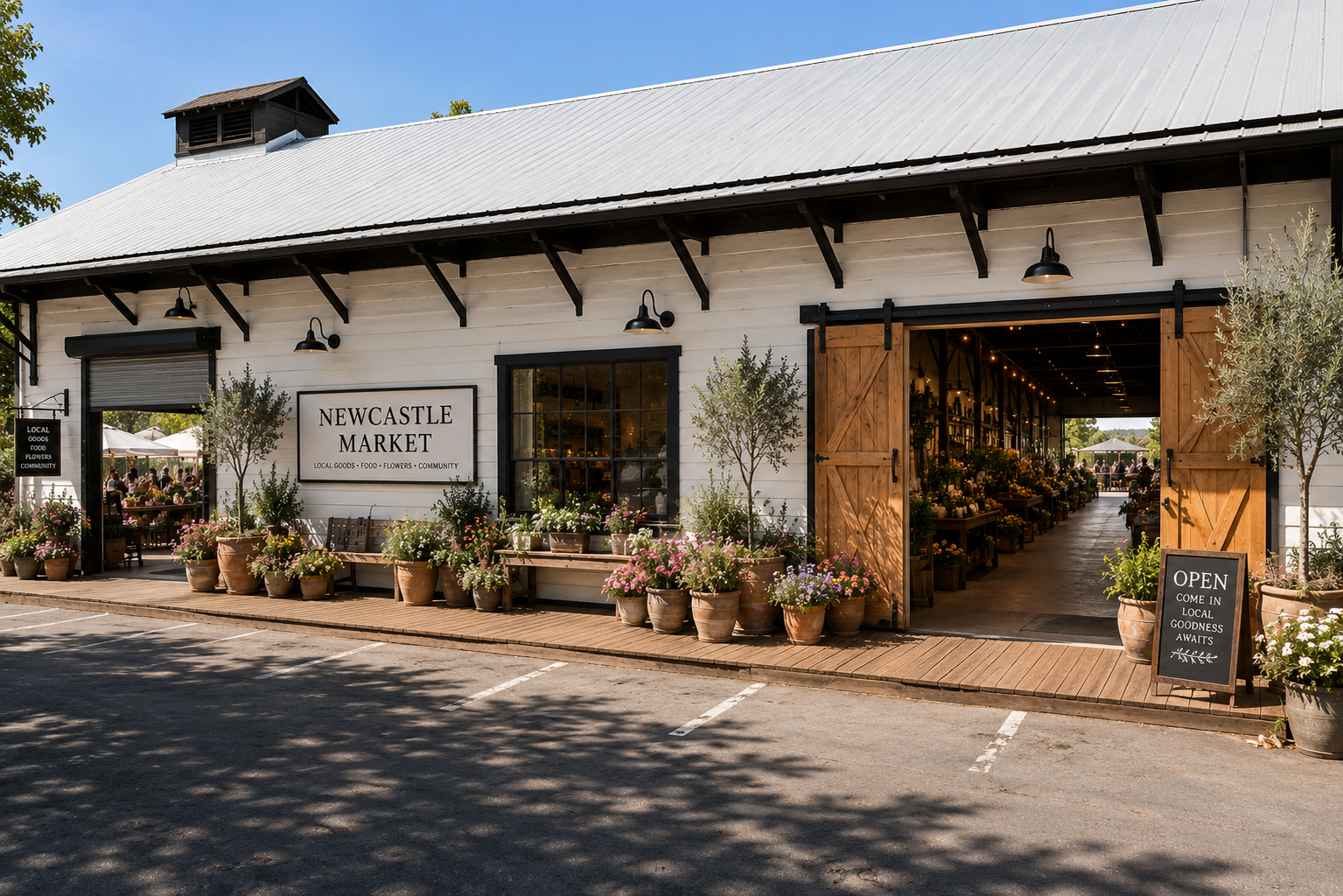
Business Plan & Partner Pitch · Downtown Newcastle, California
Newcastle
Market
LOCAL GOODS • FOOD • FLOWERS • COMMUNITY
A market hall during the week.
A farmers market on Saturday.
An event space at night.
01 — The Purpose
To bring life, beauty, local commerce
and gathering back downtown.
This is not a business designed around maximizing every square foot or generating the highest possible return. The goal is a financially sustainable gathering place.
- Pays its own expenses
- Maintains a healthy cash reserve
- Provides reasonable income for its owners
- Supports local farmers and small businesses
- Creates foot traffic for downtown Newcastle
- Provides affordable retail opportunities
- Hosts community events
- Creates an atmosphere people want to experience
- Adds something meaningful to Newcastle
Profit keeps the market healthy.
Community is the purpose.
02 — The Opportunity
A historic warehouse, available now.
Approximately 3,600 square feet in downtown Newcastle, with most of the character the concept requires already in place.
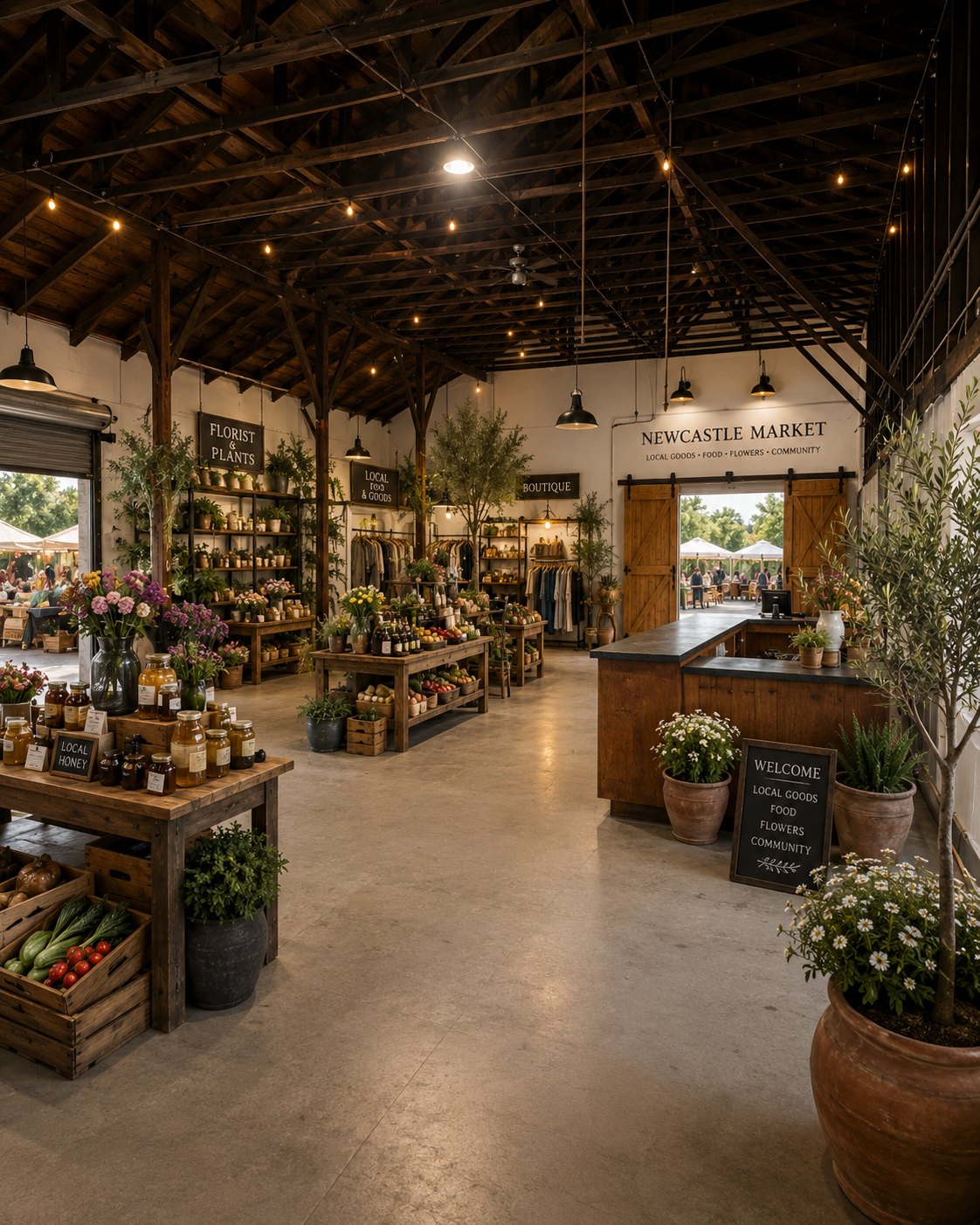
- Historic exposed timber ceiling
- Large open warehouse floor
- Front barn-style sliding doors, ~8 ft wide
- Rear commercial roll-up door directly across
- Existing wood retail counters
- Existing finished office
- Front wood deck
- Parking directly in front
- Large windows
- Historic commercial architecture
03 — Architectural Direction
Do not redesign the building.
Keep the dimensions, roofline, windows, doors, structural columns, historic timber ceiling, front barn-style door, rear roll-up door and existing openings. The transformation comes from paint, lighting, landscaping, fixtures, merchandising — and people.
Exterior
- Warm white paint, black trim
- Restored and natural wood elements
- Simple black gooseneck lighting
- Classic, understated signage
- Front deck used heavily for landscaping
The Front Deck
- Large terracotta pots
- Olive trees
- Citrus trees
- Lavender
- Rosemary
- Seasonal flowers
- Flower buckets
- Wood benches
- Planters
- Small market displays
The building itself stays quiet and timeless. Flowers, plants, produce and people provide the color.
04 — The Open-Air Experience
Front doors open. Rear door open. Daylight straight through.
The barn-style doors sit toward the right side of the front facade and are approximately eight feet wide — they are not a giant storefront opening. The rear roll-up door is directly across the warehouse. In good weather both are open, creating a pathway through the entire market. Customers step in and immediately see daylight at the far end.
- Preserve the front-to-back sightline
- No large permanent structures in the pathway
- Market activity continues out the rear roll-up door
- Outdoor market area beyond the rear door during events
05 — The Concept
A hybrid market hall.
- Permanent local merchants
- Farmers market vendors
- Flowers and plants
- Boutique shopping
- Local food
- Coffee
- Fresh bread
- Produce
- Vintage and home goods
- Local makers
- Artisans
- Workshops
- Seasonal markets
- Community events
What it is not
- Not a shopping mall.
- Not a flea market.
- Not simply a once-a-week farmers market.
What it is
- A market hall during the week.
- A farmers market on Saturday.
- An event space at night.
- A community gathering place all year.
06 — The Experience
Flower buckets spill onto the deck. Sourdough on a wood table. A farmer stacking peaches. People wander instead of rushing.
THAT EXPERIENCE IS THE PRODUCT · VENDOR REVENUE MAKES IT SUSTAINABLE
07 — The Business Model
A hybrid vendor model.
Newcastle Market leases the entire ~3,600 SF property. Instead of filling the building with our own inventory, we provide affordable, defined spaces to carefully selected independent businesses — primarily around the perimeter, with no traditional drywall storefronts.
Each merchant creates identity through wood tables, shelving, racks, cabinets, counters, signs, lighting, plants and merchandising. Newcastle Market sets design standards so the building stays visually cohesive.
Ideal founding merchant mix
Florist + Plants
200–250 SFFresh flowers, bouquets, plants, pots, herbs, seasonal flowers, garden goods
Monthly space fee $700–850
Major visual anchor
Women's Boutique
175–225 SFClothing, jewelry, hats, bags, accessories
Monthly space fee $600–750
Honeycomb Collective
150–200 SFHealthy home products, body care, skincare, laundry, home & lifestyle goods
Monthly space fee $600 internal
Bakery / Sourdough
125–175 SFBread, sourdough, pastries, cookies, packaged baked goods
Monthly space fee $550–700
Subject to food & health requirements
Local Food Merchant
125–175 SFHoney, olive oil, jams, preserves, sauces, spices, local packaged foods
Monthly space fee $500–600
Vintage + Home
175–225 SFVintage pieces, baskets, linens, kitchen goods, small furniture, decor
Monthly space fee $600–750
Artisan / Pottery / Jewelry
100–150 SFPottery, ceramics, jewelry, leather, wood, artisan goods
Monthly space fee $400–550
Coffee
150–250 SFPotential anchor merchant if infrastructure and permitting support the use
Monthly space fee $750–1,000
Do not assume food or beverage service is approved
08 — Floor Plan
Merchants at the perimeter. The center stays open.
Do not permanently monetize every square foot. The open center is essential to the atmosphere and lets the market transform for Saturday vendors, classes and evening events.
09 — The Weekend Market
10 to 16 rotating vendors every Saturday.
Keep fees affordable enough for small local businesses to participate.
Possible Saturday vendors
- Farmers
- Fruit growers
- Vegetable growers
- Flower growers
- Egg producers
- Sourdough bakers
- Honey producers
- Olive oil producers
- Jam makers
- Ceramic artists
- Jewelry makers
- Vintage sellers
- Artists
- Local makers
- Seasonal businesses
- Specialty food producers
10 — The Numbers
Simple enough to understand immediately.
Monthly operating overhead
Treat as an initial planning estimate.
Saturday participation scenarios
12 vendors × $60 = $720 per Saturday · $2,880 per month at full participation. Do not assume every market sells out.
First financial goal
Permanent merchant revenue of $4,500–$5,500/month covers most or all recurring fixed expenses — so Saturdays and events add strength rather than rescue the business.
Illustrative sustainable month
Before owner compensation, taxes, reserves and unexpected expenses.
We do not need a $20,000/month business for Newcastle Market to succeed.
A healthy Newcastle Market might generate approximately $7,000 to $9,000 monthly while maintaining manageable expenses.
- Bills are paid
- The building is maintained
- The market has reserves
- Owners are reasonably compensated as finances permit
- Vendors succeed
- Customers return
- Downtown Newcastle benefits
11 — How We Use the Surplus
The owners should not immediately remove every dollar.
- 01MARKET REVENUE
- 02PAY OPERATING EXPENSES
- 03BUILD CASH RESERVE
- 04REINVEST IN THE MARKET
- 05COMPENSATE OWNERS FOR WORK
- 06DISTRIBUTE ADDITIONAL PROFIT WHEN APPROPRIATE
A financially healthy market protects the community mission.
12 — Revenue Streams
More than one way to stay healthy.
- Permanent merchant fees
- Saturday vendor fees
- Special seasonal markets
- Classes and workshops
- Private events
- Partner-owned retail businesses
- Potential coffee / food anchor
- Community collaborations and sponsorships
13 — Events
Recurring reasons to come downtown.
- Friday Night Market
- Saturday Farmers Market
- Spring Market
- Mother's Day Flower Market
- Harvest Market
- Christmas Market
- Vintage Market
- Garden Market
- Holiday Shopping Nights
- Flower Workshops
- Sourdough Classes
- Garden Workshops
- Community Dinners
- Acoustic Music Nights
- Private Events
Events should support the permanent merchants rather than overwhelm them.
14 — Vendor Selection
Curated, not first-come.
Do not accept every vendor who applies.
- Product quality
- Local connection
- Visual presentation
- Reliability
- Customer experience
- Compatibility with existing merchants
- Contribution to the overall mix
One strong florist is better than four competing flower businesses. One beautiful boutique is better than six clothing racks from unrelated sellers.
15 — The Founding Eight
Eight founding merchants before opening.
- Preferred space selection
- Founding merchant rate
- Launch-event promotion
- Website profile
- Social media features
- Founding merchant recognition
- First opportunity for future premium locations
8 businesses.
8 customer bases.
One destination.
A traditional storefront demands higher rent, deposits, utilities, fixtures, insurance, staffing, marketing, long-term commitment and large inventory. Newcastle Market offers retail presence inside an established destination at a lower monthly cost — and every merchant contributes customers to everyone else.
16 — Pre-Lease Diligence
Verify everything before committing.
Verify
- Permitted use
- Occupancy
- Fire requirements
- Accessibility requirements
- Restroom requirements
- Food-service limitations
- Outdoor market use
- Signage rights
- Master lease permits the vendor-space model
Then build demand
- Create the brand
- Create renderings
- Create a vendor packet
- Recruit prospective merchants
- Seek written commitments where appropriate
17 — The Partnership
Do we want to build this together?
This is not primarily an investment pitch. It is a partnership pitch — between two people who care about Newcastle and want to create something lasting.
- 50/50 ownership structure
- Equal startup contribution
- Shared major decisions
- Defined individual responsibilities
- Written operating agreement
- Agreed financial controls
- Agreed reserve requirements
- Clear exit provisions protecting both partners and the friendship
18 — Startup Capital
Lean. The architecture is the value.
- Deposit
- First rent
- Cleaning
- Paint
- Lighting
- Electrical work
- Signage
- Market tables
- Fixtures
- Plants
- Security
- Insurance
- Permits
- Professional fees
- Marketing
- Opening event
- Contingency
19 — The Design Rule
Do not make the market expensive for the sake of appearing expensive.
Let the products provide the color.
Let the people provide the energy.
Let the building provide the history.
20 — The Community Effect
What one market does to a downtown.
Newcastle Market brings people downtown
People visit other Newcastle businesses
Small businesses gain customers
Farmers and makers gain affordable retail access
Events bring people together
Downtown becomes more active
Newcastle becomes somewhere people intentionally visit and spend time
21 — The Measure of Success
Do not measure this only by profit.
- Vendor retention
- Vendor success
- Saturday attendance
- Repeat customers
- Community events
- Occupancy
- Financial reserves
- Downtown foot traffic
- Community participation
- Ability to remain financially self-supporting
We don't need to get rich from Newcastle Market.
We need Newcastle Market to be healthy enough to stay.
22 — The Vision
A florist wraps flowers. Someone picks up bread. A farmer unloads peaches. Friends meet for coffee. The rear roll-up door is open and tables continue outside.
Friday evening, the lights come on. Music plays. People gather. Newcastle has somewhere to go.
Newcastle Market
LOCAL GOODS • FOOD • FLOWERS • COMMUNITY
Profit keeps the market healthy.
Community is the purpose.
Let's give Newcastle a place to gather.